Sunday, 20 September 2015

Task Four: My Community of Practice

As a biologist and ecologist, community is a word that has meaning both related to and developed alongside the sociological one. An ecological community comprises of the different populations of organisms that inhabit the same habitat, and interact. Whilst at a species level I am related to all the teachers across the country and the world, my community lives in a more localised habitat. My educational habitat could be seen as being my school, my professional community is my whanau within that school, and I represent a population of science teachers within that community.


My whanau within my school serves as a model ecosystem. Coast whanau has two senior leaders, eight teachers, a whanau admin assistant,  around 200 students and teaching assistants for our deaf students and a blind student.


The teaching community within my whanau strive to ensure the connectedness of our practice. We meet weekly to plan our inquiry learning schemes and to discuss connect our subjects. We attempt to ensure that as much of our subject teaching as possible is not separated from each other and that we break the barriers found in traditional learning environments. For instance, the maths teachers had decided to teach geometry to year 8 by having them design and build a model of a community centre for our area. I took this idea into my lessons by teaching them materials science, looking at reactivity series of metals, metal and non-metal properties, even making and smashing concrete samples to investigate the importance of proportion when mixing concrete. This folded into the maths work by getting students to consider what buildings are made of, and why we use these materials. Their global studies teacher looked at how communities can incorporate their cultural diversity and kaupapa into public buildings. By showing students how these subjects can be woven together, they created absolutely beautiful work and referenced their learning in other subjects in a way we don't normally see without this level of collaboration.


Students add the finishing touches to their buildings


This learning reflects the vision of our school, which is that learning should be authentic and relevant to the lives of our students. Our community's values of connections within learning helps to create this authenticity. My year 8s, now that their projects are finished, are looking at the controversy of the Ihumatao special housing area in Auckland, as an example of when the differing needs of a community come into conflict. This case study has led to my learners researching the history of the Maori land wars and consequent confiscation of land, debating the relative merits of slowing or halting immigration to Auckland and writing letters in support of or opposing the plans, using their persuasive writing skills learned in English.


My personal practice aligns with this core community value of authenticity and relevance, as I strive to ensure our learners are aware of the environmental and social concerns that surround their community, their learning, and their role as scientifically literate citizens.


Y7 students talking about their action as part of reduce, reuse, recycle

By linking individual subjects together, and from there to a wider context, and empowering students to address the challenges that arise from this context, our community of practice respects and promotes the kaupapa of the school.


It also relates to the wider core values and vision of the National Curriculum, the document that connects all the habitats and populations of teachers in Aotearoa New Zealand. By having a group of practitioners, all with different subject skills, who are working together to create contextual learning that enables students to engage with their world, we are helping prepare our students for whatever challenges they may face outside the classroom.


Thursday, 17 September 2015

Task Three: Professional Reading

Read the article “Reflecting on reflective practice” by Lynda Finlay (2008). Create a blog post that discusses your responses to the article and evaluate your reflective practice. You can use the following as provocations or come up with your own.
  • What is/are the points in the article that captivate your attention? In which way?
The ethical concerns of reflective practice and reflection as demolition. It's confronting to have your methods and ideas challenged, and this needs to be done sensitively and with attention to self. I feel deeply connected to my work and my role with my students, so it's hard to sometimes be dispassionate about my practice and view it critically without also becoming self-critical. It's difficult because by accepting that my practice or outlook needs to change it feels like I have let down the students I have been working with already. 

The flip side of this coin is reflection as a rote exercise. Often, appraisal and reflection carried out in a PD context feels shallow, a tick-box exercise. There's an element of admitting things could have been improved, whilst simultaneously looking at the external factors for this as being the key cause, rather than considering the only factors we can influence.

This is an extension of reflection as demolition. Recognising that reflective practice can be provocative and sensitive can result in pulling back, failing to go deep enough into the practice to really create change. A balance must be struck between the need for teachers to honestly reflect on their practice so that they can better meet the needs of their students, and for the emotional and mental wellbeing of the teacher to be upheld. 

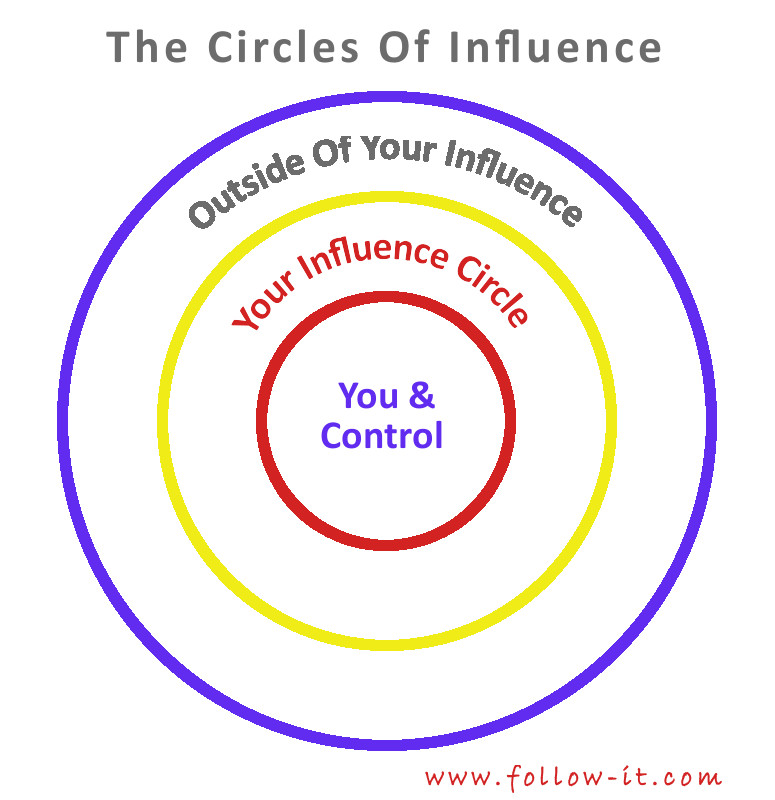
This article's points on the merits of reflective practice reminded me of Covey's concept of circles of control, influence and concern. 


Teachers are very quick to focus on the areas of concern and influence. We look at raw data and student circumstances, and feel bad or at fault for these concerns. We worry that we don't influence our students enough, or in the right way. We can become quite defensive when challenged on our responses to concerns. Reflective practice done well asks us to focus on our area of direct control. Considering what we can change and control by looking at our own pedagogical style and teaching strategies means that we can change the influence we have on those around us and ultimately push out against the concerns, instead of letting them shrink our influence and feelings of control.
  • What reflective model(s) do you find most suitable to use? Explain why?
I am a reflective person. Having dealt with some mental health issues throughout my life the need to reflect on my actions and thoughts, and the control and influence I have over both myself and others, is a strategy that has helped me deal with these issues over the years. I have found that mindfulness is a useful tool for reflection in action, for example recognising when a class is fully engaged in the work they are doing and that my place in the classroom at that time is  to be available when needed. Questioning the traditional need for a teacher to be constantly interacting with children has led to calmer, more productive lessons. I've even given students the vocabulary to ask to be left to get on with their work if they feel my presence isn't needed at that time!

On reflection on action, if there has been an incident, lesson, or practice that I feel should be reflected on then I usually take a verbal or written recount of the experience, and use this recount to consider the actions I took and how my feelings and experience led to those actions. From this I can then look to the effect those actions had on those I influence, and from there how they impact on my areas of concern. It was this approach to my planning and teaching at the end of 2014 that led to me completely reappraising my pedagogy and engaging more fully with inquiry learning.

Wednesday, 9 September 2015

Task Two: Reflections

By taking part in Mindlab as a learner has enabled me to reflect on what it means to learn, and how I can use this to better direct my teaching.


Assessment

I am a visual learner and prefer to express myself through writing.  The options for assessments to be presented as videos or presentations did not, initially, interest me much. The first assessment being delivered as a video pushed me out of my comfort zone. It was rewarding though, and I found that the process of scripting and presenting my ideas allowed for a different approach to the tasks than I may have found with just text. I found myself making videos for four out of the six assessments in the first 16 weeks. I found that the time limits on a video compared to the word count for documents created a need for clarity of ideas and thought when presenting. 

Student work after a flipped learning session


This change in approach is something I have adopted in the classroom. After starting the course, I began offering assessments to my students in a variety of media. Students who have struggled with written methods of communication started showing real creativity and understanding of content and ideas in other formats. It's allowed me to assess the understanding, rather than the medium. 


"Guide on the side, not sage on the stage"

As part of my work for the DCL course, I investigated the use of flipped learning with my students. I trialled it and used it as the foundation for two of my assessments .

Students reviewing a flipped learning resource

The original model of flipping the classroom was not a great success, but the experience has been transformative. My school has an "80/20" policy where teachers are expected to only instruct for 20% of the lesson, the other 80% being spent on group or independent tasks. 

Flipping the classroom has challenged me to step aside and let the students lead the learning. Actively supervising during tasks, being available to support rather then feeling the need to be at the front of the class all the time, has been hugely rewarding and the work my students has done this term has been among the highest quality of any I've seen. By redefining my role within the lesson I'm helping my students expand theirs. 

Guiding from the side- commenting on a student's work using docs while they're working on it

Is this going to be in the test?

This question has to be the bane of any teacher's life. When I started Mindlab, I promised myself that I would throw myself into every task, whether it related to the assessments or not. 

Very quickly though, I realised that this was not going to be as feasible as I had hoped. . Assessments, NCEA, reports, planning and the need for some non-work time meant that against my better nature, I found myself having to prioritise the learning and among the various people I sat with I heard the same refrain: "Why are we learning this if it's not in the assessment?"

I've reflected on this as showing the need for learning to have value, and the importance of recognising that the priorities of teachers and learners will not always be the same. I found that since starting at Mindlab, I've become more attuned to the priorities of my learners, and accepted that a task they don't value doesn't mean that they are wrong, or I'm failing them, but that it might be a matter of meeting their more holistic needs. 

Sunday, 6 September 2015

Task One: Introductions

Kia ora and thank you for taking the time to visit my teaching blog, as part of my Applied Practice in Context course for Mindlab.

I am a science teacher at Mission Heights Junior College, a Y7-10 school that has a vision of 21st century, collaborative learning. I've been here since 2013, after visiting the school as part of the NMSSA research team carrying out work on Science and writing progress in 2012. Prior to teaching here, I worked at a school in south Auckland for four years, and in various roles and schools in both London and Glasgow. I graduated from the University of London's Institute of Education with a PGCE in 2006, and a Bachelors in Marine and Freshwater Ecology in 2004.

I started teaching because I realised that just having a rather ordinary marine biology degree wasn't nearly enough to find work out in the field, and teaching seemed like a good way to make use of my degree while I decided what I really wanted to do. Ten years on, and I think I'm finally starting to get the hang of being in the classroom, and my stop-gap solution has turned into a vocation and a passion.
My class teaching a Primary school about water quality testing
I am committed to making Science as relevant and contextual to my students as possible, and make good use of the local woodland, streams and parks. My classes have been involved in tree planting, water quality monitoring, invertebrate sampling and pest control. I see preserving the environment as the greatest Science context of our time and the education of how to be kaitiaki to our whenua, awa and moana an essential part of my work. Thankfully, working in a school that emphasises contextual and collaborative learning allows me to weave this responsibility into my classes and allow this understanding to grow as part of learning the subject. 

Since arriving at Mission Heights I have had to critically examine my attitudes towards teaching, my pedagogy, and my personal practice. Moving from a traditional school where the lesson plans were rigid and there was little opportunity for personalised learning to here required a lot of "deprogramming", and a critique of what my teaching could, and should, actually look like. Whilst I'd always thought of myself as a fairly relaxed, open teacher, moving myself from the centre of the room to an advisory position at the side was challenging, as was moving from a rigid course with a succession of knowledge and skill building to one where I had to build my own courses within a context. It's been an incredible learning journey and I am lucky to have the opportunity to teach in such a creative, challenging environment. 

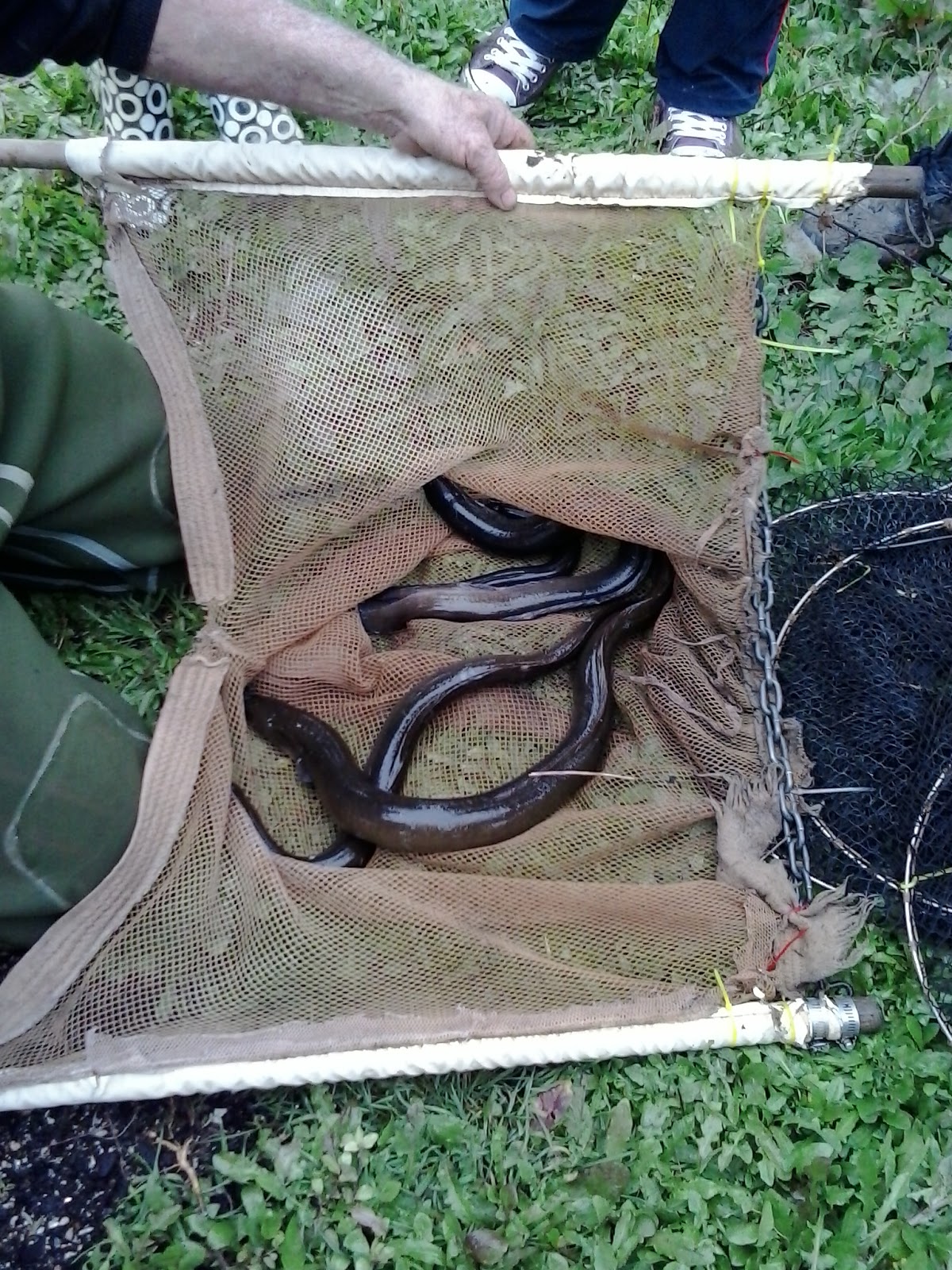
Eel trapping in the local waterways


An example of this contextual learning would be the work my Y8 classes are doing right now. They are learning about geometry and measurement in Maths, and their teachers have tasked them with building a model of a community centre for the area where they live. As we have a policy of integrating our assessments, I have been teaching them about materials, and their assessment will be to explain what materials they would use to build their finished community centre, and what properties those materials have. In social studies, their teacher has asked them to consider how the design of the centre could incorporate the different cultures and backgrounds of the community using the centre. My teaching this term has therefore included the Periodic table, the structure of the atom, metals and non-metals, reactivity series of metals, making (and destroying!) concrete and the environmental impacts of construction. Having a contextual focus for this work is a great way to keep students engaged, and with three teachers able to help manage the building of their models, the quality of the work is very high. 
Co-constructing our success criteria for a speeches evaluation

I signed up to Mindlab as I saw it as the next stage of this professional evolution I was undertaking. In my next post, I'll be talking about how the course has been for me, and consider the next steps I'll be taking once the course is finished. The Mindlab course has re-ignited my love for study and it's been wonderful having the opportunity to study again.