Showing posts with label mindlab. Show all posts

Sunday, 18 October 2015

Task Nine: Bicultural Literacy

Naku te rourou nau te rourou ka ora ai te iwi
With your basket and my basket the people will live
I arrived in Aotearoa New Zealand in January 2009 with a vague understanding of the Treaty of Waitangi, a smattering of poorly-pronounced te reo Maori and a job offer at a school in Manurewa. I made a lot of mistakes, had to unlearn a lot and I am forever grateful for the incredibly patient people who taught me the difference between the multicultural environment I had come from and the bicultural/multicultural environment I had entered. In the first few years, I struggled with questions like:

  • Why is te reo Maori given precedence when the majority of our students are Samoan? 
  • Why are Indian Fijian students excluded from certain opportunities and offers open to Maori and other Pasifika students?
  • How does biculturalism relate to multiculturalism?
Keen to unpack my own prejudices and learn more about Maori education, I joined the school's Kahui Kaiako Maori (KKM) group, working towards improving Maori education within the school. I helped create resources for fellow immigrant teachers grappling with teaching in a Maori context, presented at meetings with overseas teachers and officials, and began a process of decolonising my pedagogy to be more responsive to the needs of my learners. I started to understand the importance of indigenous rights, something that I had not had to consider in the UK, and that the kaupapa of Maori education could be applied for the benefit of all my students in a way the principles of colonial education did not. 
Looking out over Manukau Harbour

I began to critique the language and cultural norms I used in class, and adopt ones that were more inclusive. I asked students to share their cultures and languages within the class, and made a point of standing aside and giving the platform to non-white voices where possible. I discussed the concept of white privilege with older students, which led to some fascinating conversations and ideas from learners about how they viewed their place in the world. 

Once, after such a conversation, my Y10 class were completing a careers survey. A couple of students called me over and pointed out that all the photos on the site had white people doing the jobs, with a few exceptions of Maori carrying out traditional crafts. The class discussed how to approach this, and with help from their English teacher, wrote to Careers NZ. They responded very positively and a representative came to the school to discuss their concerns and they took some photos of our very diverse students to add to their photo bank for future use. Giving them the vocabulary and confidence to challenge what they saw as an a lack of representation was very powerful, and gave them agency to make positive change.
Year 8 at Ihumatao

Currently, my Year 8 have just finished looking at materials science, within the context of buildings and the local construction of the new Ormiston Town Centre. Seeing an opportunity to develop this, we investigated the Special Housing Area proposal for Ihumatao, and the group of local rangatahi who oppose the build. The students learned about the confiscation of the land in the 19th Century, the importance of the site as a waahi tapu, and the arguments for and against new housing. This led to the students learning relevant words in te reo and some understanding about Maori culture that they had not come across before. This mahi culminated in both classes visiting the Otuataua stonefields and being given a tour by park rangers. It made their work in class much more relevant and real, and they came away with greater understanding of the Maori's struggles to have their claims and rights recognised than if it had been taught out of this context.

I've come a long way since my arrival, and I still have a long way to go, but it's been an incredibly rewarding journey. 

Wednesday, 23 September 2015

Task Seven: Confessions of a reformed tweeter

I have a complex, involved relationship with social media. I've been active on message boards, Facebook and Twitter for over a decade now. I met my husband many years ago at various nights out and events organised by a Brixton-based website and political message board and as an immigrant social media is the best way I've found to stay in touch with family and friends on four continents. I tweet every day (though I closed my old, large account and have started again on a smaller scale), check facebook all the time, and ran a moderately successful blog about politics and education. (links may contain NSFW language)

Professionally though, I have shied away from social media. For a start, my school has blocked Facebook and Twitter for both staff and students, and most blogging sites are unavailable to students through our system. We have a moodle available for staff, students and parents to access and Google classroom is being trialled for possible rollout in 2016, but social media use is not encouraged at present.

I have attended uLearn conferences and know many teachers on Twitter and Facebook, but struggled with the #sciedchat and similar discussions. I touched on this in a previous post about reflective practice, but I found that the teacher discussions on social media can quite confronting. 

The issue for me is that of the danger of over-investment. As teachers, we are expected to give so much of ourselves to this job. We are constantly working. Even when we're doing other things, we never stop being a teacher. Whilst I talk about education on social media, sitting down at 8:30 at night to frantically bat ideas around with other teachers felt like I was actively allowing into my downtime the very reason I needed that downtime in the first place. Furthermore, the teachers who are on Twitter at at bedtime to discuss teaching are, by definition, the teachers who are striving to improve, to be more, to do more. An echo-chamber of teachers all discussing how much more they could do to be better was exhausting and emotionally fraught. 
Racing towards burnout?

As part of this task, I dropped in on #edchatnz, where the questions were all about workload and managing yourself, your family, and your job. It was almost distressing to see the number of teachers, at 9pm on a Thursday, talking about the evenings spent working, the family events missed, the feeling of never being able to say no. As I said on the night, it makes us poor role models to our students if we show them that virtue lies in a poor work-life balance.

Social media that is not so immediate and allows time for consideration and longer posts, seems to me to be more suitable for professional development. Unitec's google group, for example, has been a great way to discuss the course and offer support to others without the immediacy of Twitter. With our school continuing the rollout of Google Classroom I can see increased use of the platform to share ideas and connect students and will be using this next term.

The advantages of Google Classroom over Twitter with students is, as with other teachers, that of being able to remove the barriers to communication whilst not having the demand or expectation of immediate response. Students understanding that teachers are available to help or communicate with them, but that they also have a life outside of their profession, is important. Being able to set times that I'll check the page and answer questions helps me manage my workload, sets parameters for student expectations and also helps students manage their own workloads. It's bad enough that adults are expected to be constantly connected to their work and be available 24/7 without putting that expectation on children as well.

Despite these challenges, I do firmly believe that social media has a place in the classroom. For example, I have had Y7 students use social media to contact and then conduct Skype chats with Geonet scientists, and hope that our school's policies on these platforms will evolve to allow us greater access to this resource.

Sunday, 20 September 2015

Task Five: Professional Connections

Science as a subject touches the lives of every single person in ways both subtle and overt. Neil Degrasse Tyson has described scientific illiteracy as a "tragedy of our times" and the need to instil a level of understanding about the scientific process and the issues facing us as a species is an ongoing challenge. Science is a subject that therefore links into most other subjects found within the school curriculum, a large number of employment sectors, and other areas such as community and politics. The diagram below shows the connections made between my own practice as a science teacher and other communities. 
Full diagram here

As I've discussed in earlier entries, I am lucky that my school's vision for education makes finding connections between subjects a core part of our planning and teaching. Looking at the left hand side of the diagram, I have already taught extensively with teachers in every subject specialism listed. Within social studies and maths especially, there has been a lot of cross-curricular inquiry carried out that has linked to authentic, relevant contexts. These links to other subjects within the school are very positive and satisfying as they allow teachers to develop their skills in new areas and to deepen their understanding of the relevance of their subject to a wider context. 

Staying on the left, there are links to be further developed between my practice as a junior college teacher and how the subject is taught to other age levels. There is a primary school on the same site as my college, and a senior college a few minutes' walk away, but at present there is little opportunity for planning and curriculum development between these schools. There has been some crossover, for example the conservation day below, but we have very little knowledge of what Science is being taught in the primary school, or what the senior college is focusing on that we could support at the junior level. There's a lot of potential to create contexts that span several year groups and schools, but there is a need to make professional development time available for teachers to meet and plan before this can happen.

Waicare Day with Y5 students, 2013


On the right side are the employment sectors that science teaching links to. Aside from STEM, the links to media, communications, health, politics and conservation are emerging as being increasingly relevant to all our learners no matter where they are headed in their professional lives. The links that I am developing with environmental, conservation and political communities are particularly interesting. As part of our joint English/Science work on sustainability and the Outlook for Someday competition, a group asked if they could interview the environmental campaigner Michael Tavares on tree conservation. He agreed to come in and give a seminar to the whole year group on the importance of activism, being informed about local and wider issues, and what can be achieved through campaigning and raising awareness.
Michael Tavares discusses the need to be an informed citizen
The response students have had to links like this has been explored in my previous post but these connections have helped to reinforce the message that they have power and influence within and outside the classroom, and the difference that can be made through positive actions. It's important to build on the current links being made within the school, and develop links outside it, so that the students can see the relevance of their learning outside of the classroom.

Task Four: My Community of Practice

As a biologist and ecologist, community is a word that has meaning both related to and developed alongside the sociological one. An ecological community comprises of the different populations of organisms that inhabit the same habitat, and interact. Whilst at a species level I am related to all the teachers across the country and the world, my community lives in a more localised habitat. My educational habitat could be seen as being my school, my professional community is my whanau within that school, and I represent a population of science teachers within that community.


My whanau within my school serves as a model ecosystem. Coast whanau has two senior leaders, eight teachers, a whanau admin assistant,  around 200 students and teaching assistants for our deaf students and a blind student.


The teaching community within my whanau strive to ensure the connectedness of our practice. We meet weekly to plan our inquiry learning schemes and to discuss connect our subjects. We attempt to ensure that as much of our subject teaching as possible is not separated from each other and that we break the barriers found in traditional learning environments. For instance, the maths teachers had decided to teach geometry to year 8 by having them design and build a model of a community centre for our area. I took this idea into my lessons by teaching them materials science, looking at reactivity series of metals, metal and non-metal properties, even making and smashing concrete samples to investigate the importance of proportion when mixing concrete. This folded into the maths work by getting students to consider what buildings are made of, and why we use these materials. Their global studies teacher looked at how communities can incorporate their cultural diversity and kaupapa into public buildings. By showing students how these subjects can be woven together, they created absolutely beautiful work and referenced their learning in other subjects in a way we don't normally see without this level of collaboration.


Students add the finishing touches to their buildings


This learning reflects the vision of our school, which is that learning should be authentic and relevant to the lives of our students. Our community's values of connections within learning helps to create this authenticity. My year 8s, now that their projects are finished, are looking at the controversy of the Ihumatao special housing area in Auckland, as an example of when the differing needs of a community come into conflict. This case study has led to my learners researching the history of the Maori land wars and consequent confiscation of land, debating the relative merits of slowing or halting immigration to Auckland and writing letters in support of or opposing the plans, using their persuasive writing skills learned in English.


My personal practice aligns with this core community value of authenticity and relevance, as I strive to ensure our learners are aware of the environmental and social concerns that surround their community, their learning, and their role as scientifically literate citizens.


Y7 students talking about their action as part of reduce, reuse, recycle

By linking individual subjects together, and from there to a wider context, and empowering students to address the challenges that arise from this context, our community of practice respects and promotes the kaupapa of the school.


It also relates to the wider core values and vision of the National Curriculum, the document that connects all the habitats and populations of teachers in Aotearoa New Zealand. By having a group of practitioners, all with different subject skills, who are working together to create contextual learning that enables students to engage with their world, we are helping prepare our students for whatever challenges they may face outside the classroom.


Thursday, 17 September 2015

Task Three: Professional Reading

Read the article “Reflecting on reflective practice” by Lynda Finlay (2008). Create a blog post that discusses your responses to the article and evaluate your reflective practice. You can use the following as provocations or come up with your own.
  • What is/are the points in the article that captivate your attention? In which way?
The ethical concerns of reflective practice and reflection as demolition. It's confronting to have your methods and ideas challenged, and this needs to be done sensitively and with attention to self. I feel deeply connected to my work and my role with my students, so it's hard to sometimes be dispassionate about my practice and view it critically without also becoming self-critical. It's difficult because by accepting that my practice or outlook needs to change it feels like I have let down the students I have been working with already. 

The flip side of this coin is reflection as a rote exercise. Often, appraisal and reflection carried out in a PD context feels shallow, a tick-box exercise. There's an element of admitting things could have been improved, whilst simultaneously looking at the external factors for this as being the key cause, rather than considering the only factors we can influence.

This is an extension of reflection as demolition. Recognising that reflective practice can be provocative and sensitive can result in pulling back, failing to go deep enough into the practice to really create change. A balance must be struck between the need for teachers to honestly reflect on their practice so that they can better meet the needs of their students, and for the emotional and mental wellbeing of the teacher to be upheld. 

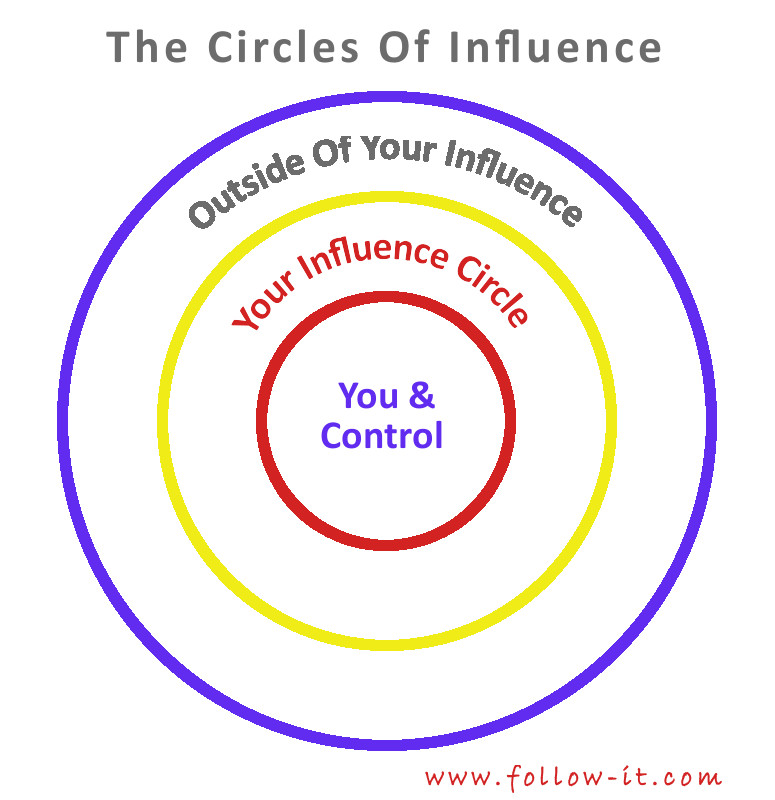
This article's points on the merits of reflective practice reminded me of Covey's concept of circles of control, influence and concern. 


Teachers are very quick to focus on the areas of concern and influence. We look at raw data and student circumstances, and feel bad or at fault for these concerns. We worry that we don't influence our students enough, or in the right way. We can become quite defensive when challenged on our responses to concerns. Reflective practice done well asks us to focus on our area of direct control. Considering what we can change and control by looking at our own pedagogical style and teaching strategies means that we can change the influence we have on those around us and ultimately push out against the concerns, instead of letting them shrink our influence and feelings of control.
  • What reflective model(s) do you find most suitable to use? Explain why?
I am a reflective person. Having dealt with some mental health issues throughout my life the need to reflect on my actions and thoughts, and the control and influence I have over both myself and others, is a strategy that has helped me deal with these issues over the years. I have found that mindfulness is a useful tool for reflection in action, for example recognising when a class is fully engaged in the work they are doing and that my place in the classroom at that time is  to be available when needed. Questioning the traditional need for a teacher to be constantly interacting with children has led to calmer, more productive lessons. I've even given students the vocabulary to ask to be left to get on with their work if they feel my presence isn't needed at that time!

On reflection on action, if there has been an incident, lesson, or practice that I feel should be reflected on then I usually take a verbal or written recount of the experience, and use this recount to consider the actions I took and how my feelings and experience led to those actions. From this I can then look to the effect those actions had on those I influence, and from there how they impact on my areas of concern. It was this approach to my planning and teaching at the end of 2014 that led to me completely reappraising my pedagogy and engaging more fully with inquiry learning.

Wednesday, 9 September 2015

Task Two: Reflections

By taking part in Mindlab as a learner has enabled me to reflect on what it means to learn, and how I can use this to better direct my teaching.


Assessment

I am a visual learner and prefer to express myself through writing.  The options for assessments to be presented as videos or presentations did not, initially, interest me much. The first assessment being delivered as a video pushed me out of my comfort zone. It was rewarding though, and I found that the process of scripting and presenting my ideas allowed for a different approach to the tasks than I may have found with just text. I found myself making videos for four out of the six assessments in the first 16 weeks. I found that the time limits on a video compared to the word count for documents created a need for clarity of ideas and thought when presenting. 

Student work after a flipped learning session


This change in approach is something I have adopted in the classroom. After starting the course, I began offering assessments to my students in a variety of media. Students who have struggled with written methods of communication started showing real creativity and understanding of content and ideas in other formats. It's allowed me to assess the understanding, rather than the medium. 


"Guide on the side, not sage on the stage"

As part of my work for the DCL course, I investigated the use of flipped learning with my students. I trialled it and used it as the foundation for two of my assessments .

Students reviewing a flipped learning resource

The original model of flipping the classroom was not a great success, but the experience has been transformative. My school has an "80/20" policy where teachers are expected to only instruct for 20% of the lesson, the other 80% being spent on group or independent tasks. 

Flipping the classroom has challenged me to step aside and let the students lead the learning. Actively supervising during tasks, being available to support rather then feeling the need to be at the front of the class all the time, has been hugely rewarding and the work my students has done this term has been among the highest quality of any I've seen. By redefining my role within the lesson I'm helping my students expand theirs. 

Guiding from the side- commenting on a student's work using docs while they're working on it

Is this going to be in the test?

This question has to be the bane of any teacher's life. When I started Mindlab, I promised myself that I would throw myself into every task, whether it related to the assessments or not. 

Very quickly though, I realised that this was not going to be as feasible as I had hoped. . Assessments, NCEA, reports, planning and the need for some non-work time meant that against my better nature, I found myself having to prioritise the learning and among the various people I sat with I heard the same refrain: "Why are we learning this if it's not in the assessment?"

I've reflected on this as showing the need for learning to have value, and the importance of recognising that the priorities of teachers and learners will not always be the same. I found that since starting at Mindlab, I've become more attuned to the priorities of my learners, and accepted that a task they don't value doesn't mean that they are wrong, or I'm failing them, but that it might be a matter of meeting their more holistic needs.