Showing posts with label areas of influence. Show all posts

Tuesday, 22 September 2015

Task Six: Issues in Education

Inequality and food literacy
We live in the 21st century, and we are starting to move our teaching practice and learning communities towards the 21st century too. However, the march of progress seen in our classrooms sometimes feels like a march away from the nearly 20% of New Zealanders living in poverty. 
Source: Statistics New Zealand
In "Some inconvenient truths about education in Aotearoa-New Zealand", Martin Thrupp argues that there is a section of children from low-income families who are "locked out" of the educational opportunities available to those who are better-off. Decile ratings are used a blunt instrument by parents and some sections of the media as a measure of a school's quality. There is no centralised program for feeding the poorest children in society as in other countries, so charities and NGOs are left to fill the gap. It is estimated that 180,000 kids in Aotearoa New Zealand go without the essentials. The effect of hunger and deprivation on classroom performance has been a point of political debate but most teachers would agree that without adequate nourishment, resources and family support, students struggle in school. 


Y7 students showing off their carrots, grown in our school garden
My learning community is in an area that is seen as being quite affluent. However, the issues of malnutrition and poverty are still found in every classroom. Our whanau has responded with strategies to help those students most in need. To meet the immediate needs of hungry students, we started buying noodles, muesli bars and protein shakes to keep in case students turned up hungry. This program has evolved so that we are now offering fresh sandwiches to students who need it. It doesn't seem like much but for those students it's helped them focus in class, helped them feel supported and has improved attendance. 

We also support students in financial hardship by paying for trips and events that they might not otherwise be able to access. I have paid for Science roadshow entries for students who could not afford it, and as a whanau we have found funds to send some students on school camp and OPC out of our budget. 


Source
 In the longer term, I have taken over the school garden which has been rather neglected in the last few years. Yesterday students carried out a litter pick and in the process discovered that carrots planted some time ago were ready for harvest. The students were incredibly excited about eating produce grown in their own "back garden" and from next term I hope to plant vegetables so that we can offer fresh, nutritious food to our students. This also ties in with my commitment to the environment, sustainability, and giving students authentic, relevant outcomes for learning.

Making students more food aware addresses another issue, that of food literacy and nutrition. 


"What's the green bit for miss?"
With over half of our young people failing to eat enough vegetables, and the number of children who classify as obese in New Zealand rising, there is a real need to investigate how we can help young people and their families access better-quality food, in particular fruit and vegetables. 

There are lots of NGOs working in this field across New Zealand Aotearoa and abroad, but within our own learning community being able to show learners how food is grown, and giving them a space where they can grow their own food, is invaluable. 
Source


Watching my students pull carrots out of the ground, wash them and then tentatively take a bite before triumphantly proclaiming that they "taste just like carrots!" reinforces that we need to show children the value of getting their hands dirty and seeing where food comes from and how it can be made. By providing education, space to practice, and time to experiment, we can help reconnect our communities with the whenua and their food.


Thursday, 17 September 2015

Task Three: Professional Reading

Read the article “Reflecting on reflective practice” by Lynda Finlay (2008). Create a blog post that discusses your responses to the article and evaluate your reflective practice. You can use the following as provocations or come up with your own.
  • What is/are the points in the article that captivate your attention? In which way?
The ethical concerns of reflective practice and reflection as demolition. It's confronting to have your methods and ideas challenged, and this needs to be done sensitively and with attention to self. I feel deeply connected to my work and my role with my students, so it's hard to sometimes be dispassionate about my practice and view it critically without also becoming self-critical. It's difficult because by accepting that my practice or outlook needs to change it feels like I have let down the students I have been working with already. 

The flip side of this coin is reflection as a rote exercise. Often, appraisal and reflection carried out in a PD context feels shallow, a tick-box exercise. There's an element of admitting things could have been improved, whilst simultaneously looking at the external factors for this as being the key cause, rather than considering the only factors we can influence.

This is an extension of reflection as demolition. Recognising that reflective practice can be provocative and sensitive can result in pulling back, failing to go deep enough into the practice to really create change. A balance must be struck between the need for teachers to honestly reflect on their practice so that they can better meet the needs of their students, and for the emotional and mental wellbeing of the teacher to be upheld. 

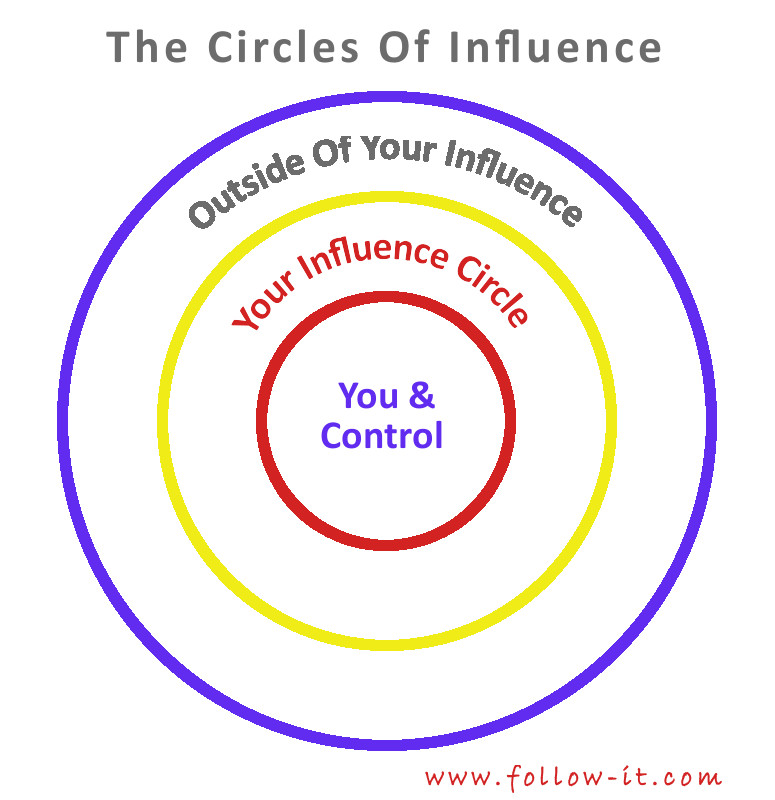
This article's points on the merits of reflective practice reminded me of Covey's concept of circles of control, influence and concern. 


Teachers are very quick to focus on the areas of concern and influence. We look at raw data and student circumstances, and feel bad or at fault for these concerns. We worry that we don't influence our students enough, or in the right way. We can become quite defensive when challenged on our responses to concerns. Reflective practice done well asks us to focus on our area of direct control. Considering what we can change and control by looking at our own pedagogical style and teaching strategies means that we can change the influence we have on those around us and ultimately push out against the concerns, instead of letting them shrink our influence and feelings of control.
  • What reflective model(s) do you find most suitable to use? Explain why?
I am a reflective person. Having dealt with some mental health issues throughout my life the need to reflect on my actions and thoughts, and the control and influence I have over both myself and others, is a strategy that has helped me deal with these issues over the years. I have found that mindfulness is a useful tool for reflection in action, for example recognising when a class is fully engaged in the work they are doing and that my place in the classroom at that time is  to be available when needed. Questioning the traditional need for a teacher to be constantly interacting with children has led to calmer, more productive lessons. I've even given students the vocabulary to ask to be left to get on with their work if they feel my presence isn't needed at that time!

On reflection on action, if there has been an incident, lesson, or practice that I feel should be reflected on then I usually take a verbal or written recount of the experience, and use this recount to consider the actions I took and how my feelings and experience led to those actions. From this I can then look to the effect those actions had on those I influence, and from there how they impact on my areas of concern. It was this approach to my planning and teaching at the end of 2014 that led to me completely reappraising my pedagogy and engaging more fully with inquiry learning.